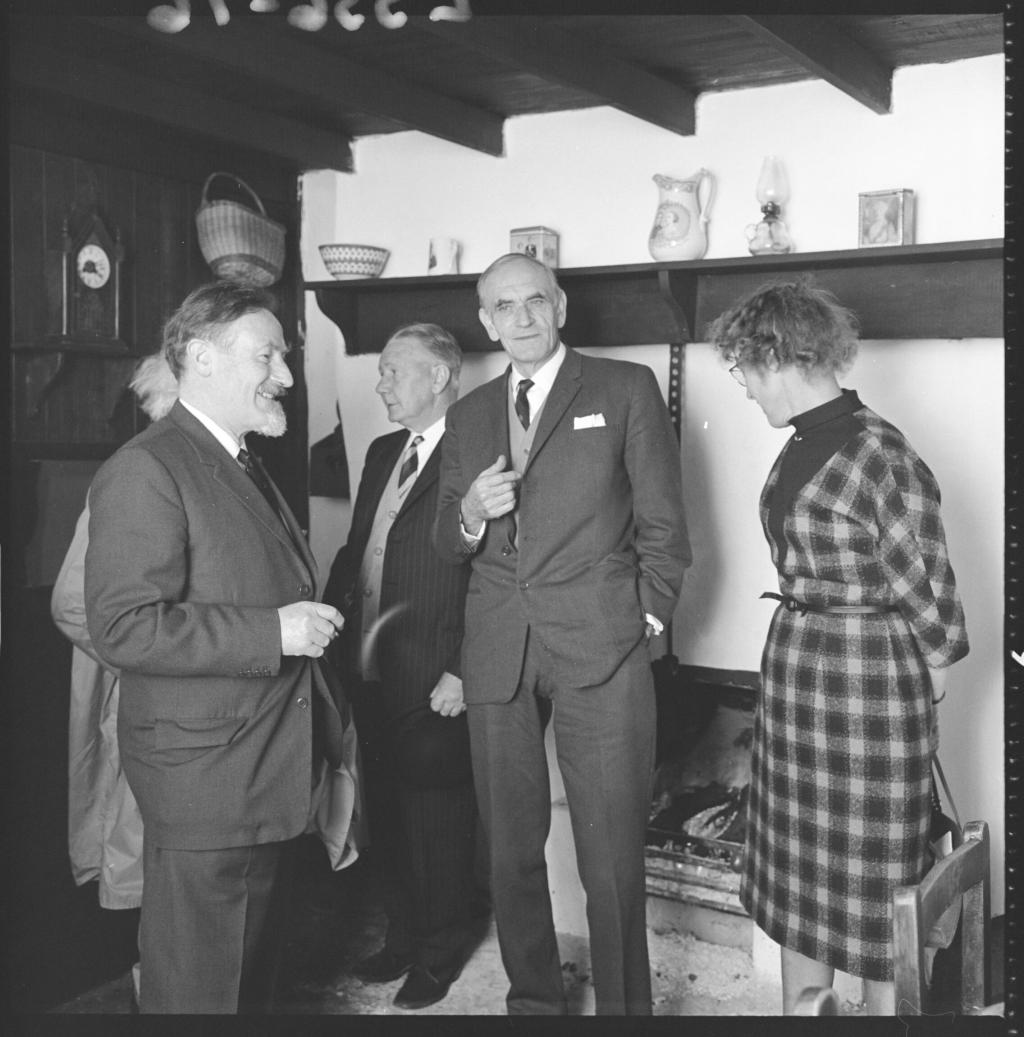
National Museums NI Library and Archives (photographic archive), L Series, HOYFM.L118.7. Opening of first outdoor exhibit - Duncrun, Cottar House, from Magilligan, Co. Derry. Terence O'Neill (Prime Minister), George Thompson (Director of the Museum) and Sir Robin Kinahan (First Chairman, Board of Trustees). 31/05/1963
‘The Ulster Folk Museum Northern Ireland Act’ … ‘reflected Captain O’Neill’s conviction that such a museum could give Ulster people a common interest.’1
This statement regarding the 1958 Ulster Folk Museum Act captures the museum as both a cultural and social project. However, its creation should not be understood as a singular legislative event; rather, it emerged from decades of intellectual development, institutional collaboration, and civic advocacy. Long before the museum was formally constituted, a network of committees, surveys, publications and individuals had already begun documenting, preserving and conceptualising Ulster’s folklife. In this sense, the museum can be understood not as a singular point of origin but as the institutional consolidation of an existing ethnological infrastructure.
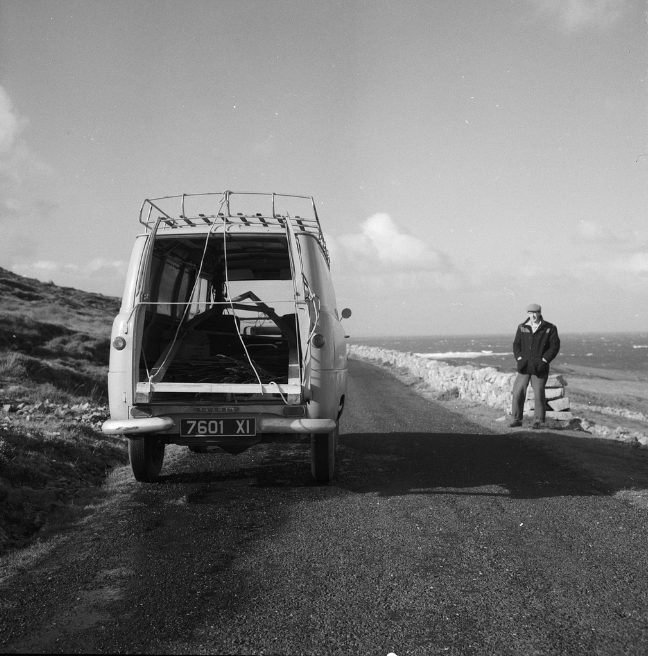
Image
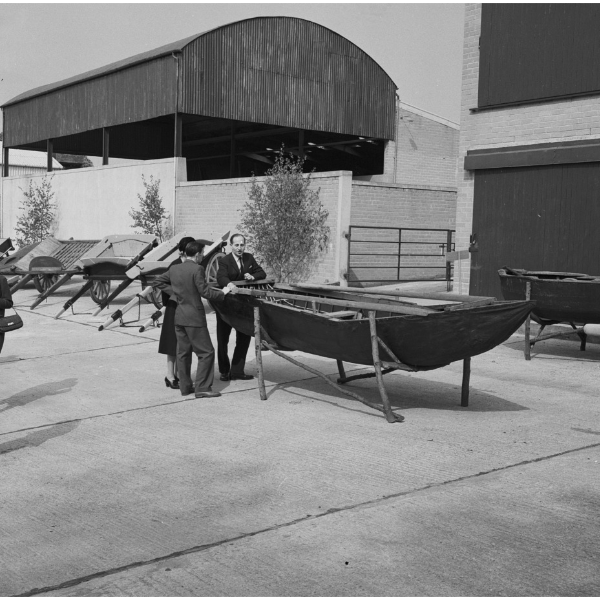
National Museums NI Library and Archives (photographic archive), L Series, HOYFM.L35.4. Photographic negative; Building a Curragh, Downings Co. Donegal. Museum van en route for home. Director also in picture.
Collecting Practices across Ulster during the 1930s
Arguably, the origins of the Ulster Folk Museum lie in the development of collecting practices across Ulster from the late 1930s onwards. Figures such as Emyr Estyn Evans, George Thompson, Oliver Davies and T. G. F. Paterson were central to early efforts to document the material and intangible heritage of rural Ulster. These initiatives – ranging from questionnaires and field notebooks to appeals for funding – demonstrate that the idea of a folk museum for Ulster emerged from the practical work of collecting itself. This emphasis on systematic documentation suggests that the museum was initially conceived as an archive. As Paterson observed, the ‘wealth and worth of these unwritten sources of human history’ demanded preservation2. Crucially, this work was shaped by contemporary anxieties surrounding modernisation and the perceived disappearance of rural traditions. The outbreak of the Second World War forced a move away from archaeological excavation, prompting Evans, Professor of Geography at Queen’s University Belfast, to concentrate more on Irish folk culture and to expand his fieldwork as conditions changed rapidly. The result was the eventual formation of the ‘Ulster Folk Museum and Archive,’ a research-led project grounded in the systematic collecting of folklife material, both tangible and intangible. By the time legislative support was secured, much of the intellectual and evidential groundwork had already been established.3
Image
National Museums NI Library and Archives (photographic archive), L Series, HOYFM.L336.16. Depicts Emyr Estyn Evans at the official opening of Ballydugan Weavers House (Map Location: Rural 'Field' Area, numbered 39), 1967.
The Committee on Ulster Folklife and Tradition
The establishment of the Committee on Ulster Folklife and Tradition (CUFT) in 1953 marked a decisive stage in the institutionalisation of these earlier efforts. Chaired by Evans, and including figures such as G. B. Newe, T. G. F. Paterson, Dame Dehra Parker and G. B. Thompson (the Ulster Folk Museum’s first director), the committee brought together an influential group of academic, civic and political figures. CUFT operated as a coordinating body for collecting, research and advocacy, effectively performing the role of an institution prior to the existence of the museum itself. Supported by the Northern Ireland Council of Social Service, which provided ‘a meeting place and storage space for the folklore collection it envisaged,’ the committee facilitated both practical and intellectual development.4 The committee's activities included the distribution of questionnaires, the organisation of correspondents, and the development of archival collections. Although the initial public response was disappointing, the committee continued its work – acting as an important pressure group behind the museum’s creation.
As John Campbell states, ‘there can be no doubt that the efforts of the Committee on Ulster Folklife and Tradition – thanks partly to the prestige and goodwill of the Northern Ireland Council of Social Service, and partly to the influence of political leaders such as Dame Dehra Parker and W. B. Maginess – played a considerable role as a pressure group in the movement to establish an Ulster Folk Archive and Museum.’5
In this sense, CUFT can be understood as part of a wider network of informal cultural infrastructure, sustaining the idea of a folk museum for Ulster in the absence of formal institutional support.
Image
National Museums NI Library and Archives (photographic archive), L Series, HOYFM.L336.16. Photographic negative; Opening of first outdoor exhibit - Duncrun, Cottar House, from Magilligan, Co. Derry. Capt. T. O'Neill with Director examines the Curragh.
Emyr Estyn Evans: Influence and Networks
The success of CUFT was closely linked to the broader networks within which its members operated. Evans, in particular, exemplified the integration of academic research and public engagement. His involvement in extra-mural teaching, advisory committees and governmental initiatives reflected deliberate efforts to move beyond the university and build public support, creating strong links between Queen’s University Belfast, government and civic networks. As Evans himself notes, ‘the department gradually became involved with co-operative enterprises with organisations such as the Council of Social Service and with various Government ministries.’6 Such relationships provided crucial avenues through which folklife research could be translated into institutional development and policy. Additionally, Dame Dehra Parker’s involvement – both in earlier funding efforts for folklife research and later with CUFT – demonstrates how political influence was mobilised to support the Ulster Folk Museum project. These networks ultimately led to government action; in 1958, Captain Terence O’Neill, as Minister of Finance, renewed the committee’s grant and announced plans for an Ulster Folk Museum Bill, with the subsequent Act formalising what had been a largely collaborative, non-state-sanctioned initiative.
Alongside committee work and political lobbying, volunteer participation was central to the development of ethnological research in Ulster. Large-scale surveys, such as the Preliminary Survey of the Ancient Monuments of Northern Ireland (1940), relied on coordinated networks of contributors. Evans ‘advised and co-ordinated the fieldwork of volunteer surveyors throughout the six counties,’ resulting in ‘the first of its kind in any part of Ireland.’ Similarly, the Land Utilisation Survey required ‘nearly a thousand mappers’, reflecting the scale of participation involved.7 These projects demonstrate that systematic documentation of Ulster’s landscape and culture was well established prior to the museum’s creation, whilst also highlighting the collaborative role of volunteers in knowledge production across the province. This interdisciplinary approach – integrating archaeological, geographical and ethnological fieldwork – reinforced Evans’ view of the relationship between ‘man and nature’, an idea that would later underpin the museum’s interpretive framework.8
Image
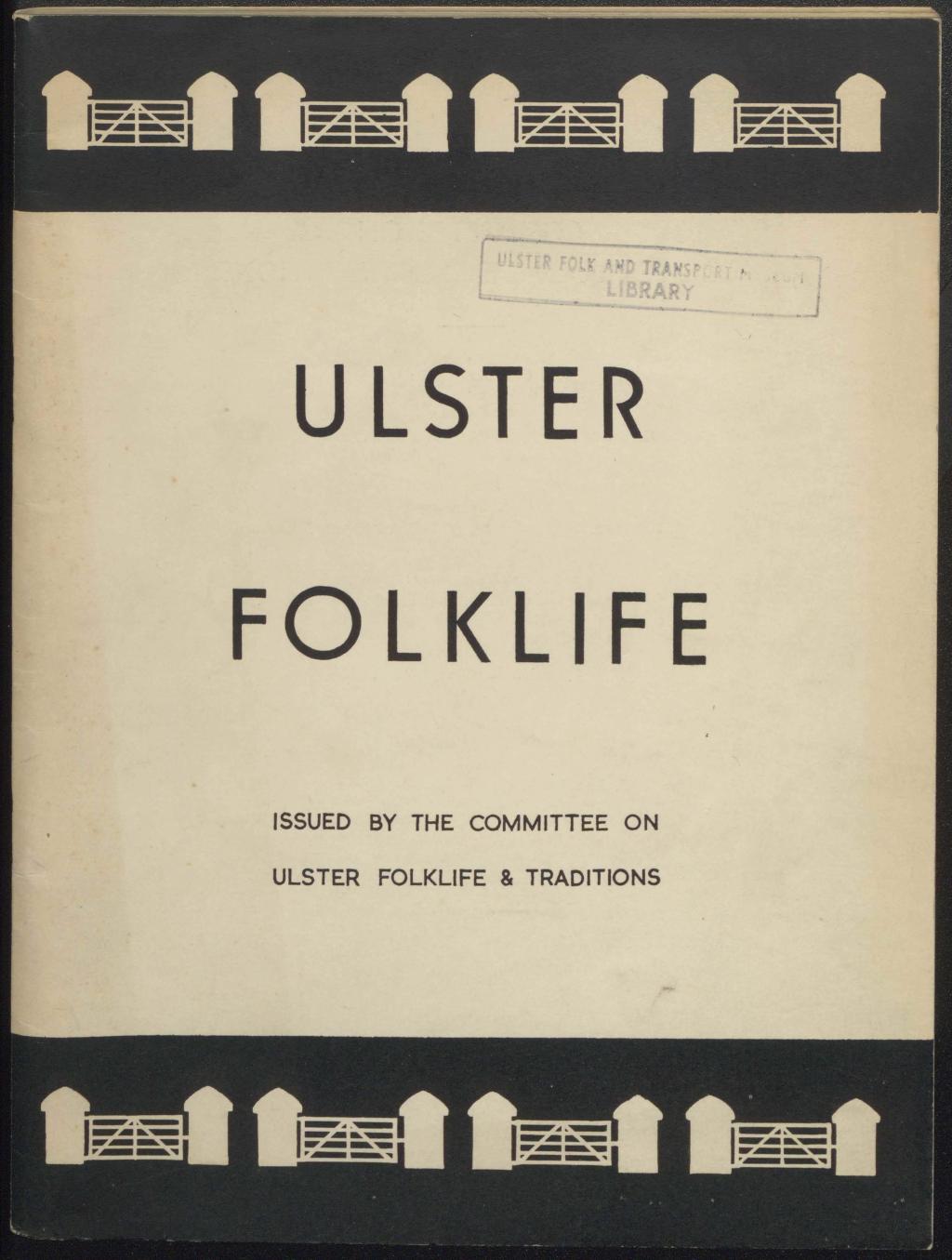
National Museums NI Library and Archives, Ulster Folklife, published by the Committee on Ulster Folklife and Traditions. Volume 1. All volumes accessible at: https://collections.nationalmuseumsni.org/b569325
Publications: Archaeology, Folklife Studies and Geography
Publications also formed a crucial component of this broader network. The revival of the Ulster Journal of Archaeology in 1938 addressed the need to publish excavation reports whilst incorporating more accessible material on local history and folklore, thus extending research beyond specialist audiences. The launch of Ulster Folklife in 1955, emerging from CUFT, further consolidated folklife studies by providing a dedicated platform later taken over by the Ulster Folk Museum. Together, these journals functioned as both scholarly outlets and instruments of advocacy, helping to legitimise the field and strengthen the case for institutional support.
Image
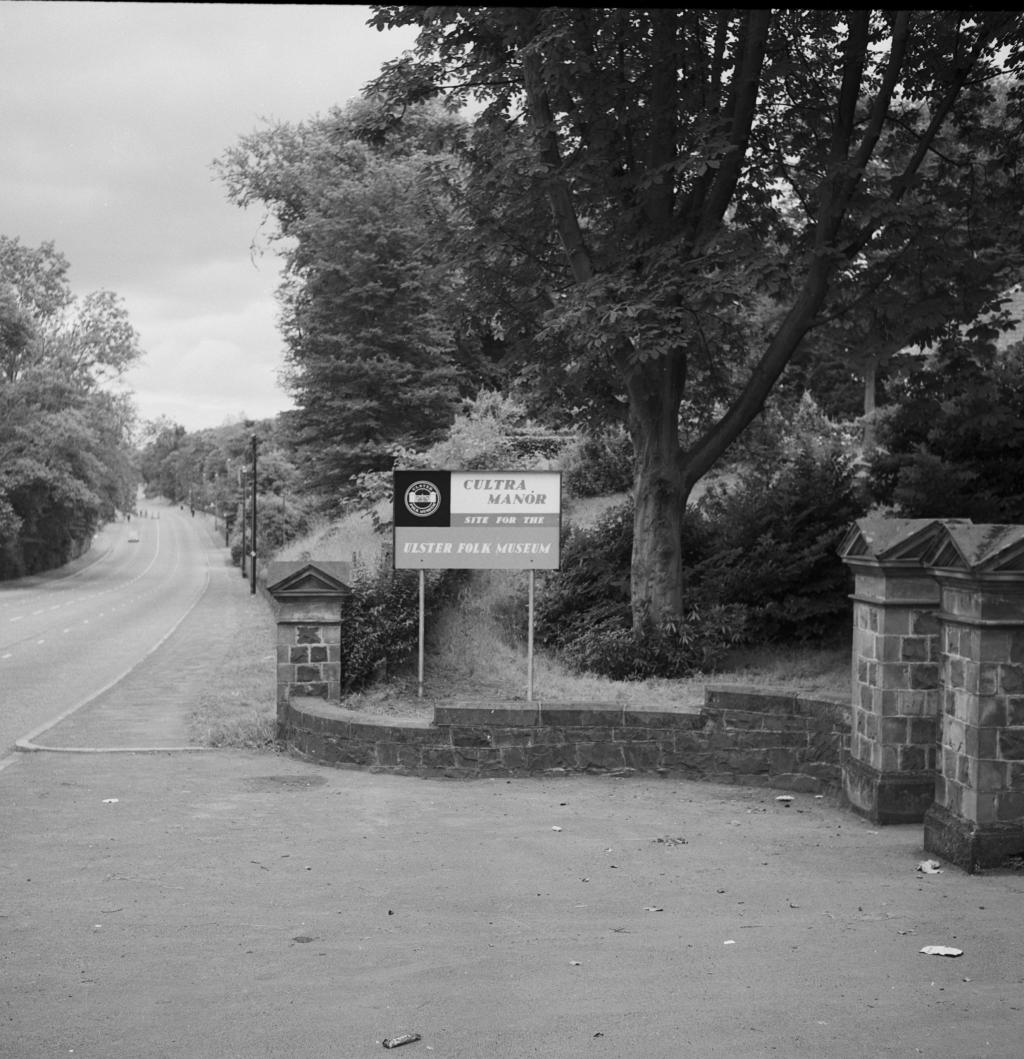
National Museums NI Library and Archives (photographic archive), L Series, HOYFM. L10.13. Photographic negative; Original entrance to Ulster Folk Museum, Cultra.
Committees, Collecting and Collaboration: The Genesis of the Ulster Folk Museum
The Ulster Folk Museum therefore was not the product of a single initiative but the culmination of sustained collaboration across committees, volunteer networks, publications and political networks. By its establishment in 1958 and opening in 1964, its intellectual and organisational foundations were already firmly in place, making the museum less a beginning than a formalisation of an existing network. This history highlights the often-unseen labour behind cultural institutions; the museum stands not only as a site of preservation, but as the material outcome of decades of research, advocacy and collaboration.
Campbell, John A. The Queen’s University of Belfast Department of Geography Jubilee, 1928 – 1978: Geography at Queen’s, a Historical Survey. Department Research Paper no. 2. Belfast: Queen’s University of Belfast, Department of Geography, 1978, pg. 35
Ibid, pg. 27
Thompson, G. B. ‘The Ulster Folk Museum: Its proposed function and purpose, as indicated by existing folk museums’, Conference of Local Authorities in Northern Ireland, 25th September 1959, National Museums NI Library and Archives, UFTM/THOM/BOX1/124
Belfast Newsletter, ‘Ulster Folklife Record of traditions and old customs’, by a special correspondent. 25th February 1958, National Museums NI Library and Archives, uncatalogued, found in EEE Boxes, Box 4, Folder 6, ZI-8-6-1 (xxxiii)
Campbell, John A. The Queen’s University of Belfast Department of Geography Jubilee, 1928 – 1978: Geography at Queen’s, a Historical Survey. Department Research Paper no. 2. Belfast: Queen’s University of Belfast, Department of Geography, 1978, pg. 35
Evans, E. Estyn. ‘Beginnings’ from The Queen’s University of Belfast Department of Geography Jubilee, 1928 – 1978: Geography at Queen’s, a Historical Survey. Department Research Paper no. 2. Belfast: Queen’s University of Belfast, Department of Geography, 1978, pg. 12
Campbell, John A. The Queen’s University of Belfast Department of Geography Jubilee, 1928 – 1978: Geography at Queen’s, a Historical Survey. Department Research Paper no. 2. Belfast: Queen’s University of Belfast, Department of Geography, 1978, pg. 24
Evans, Estyn. The Irishness of the Irish, in Ireland and the Atlantic Heritage: Selected Writings, Ireland: The Lilliput Press, 1996, pg. 32