

Image
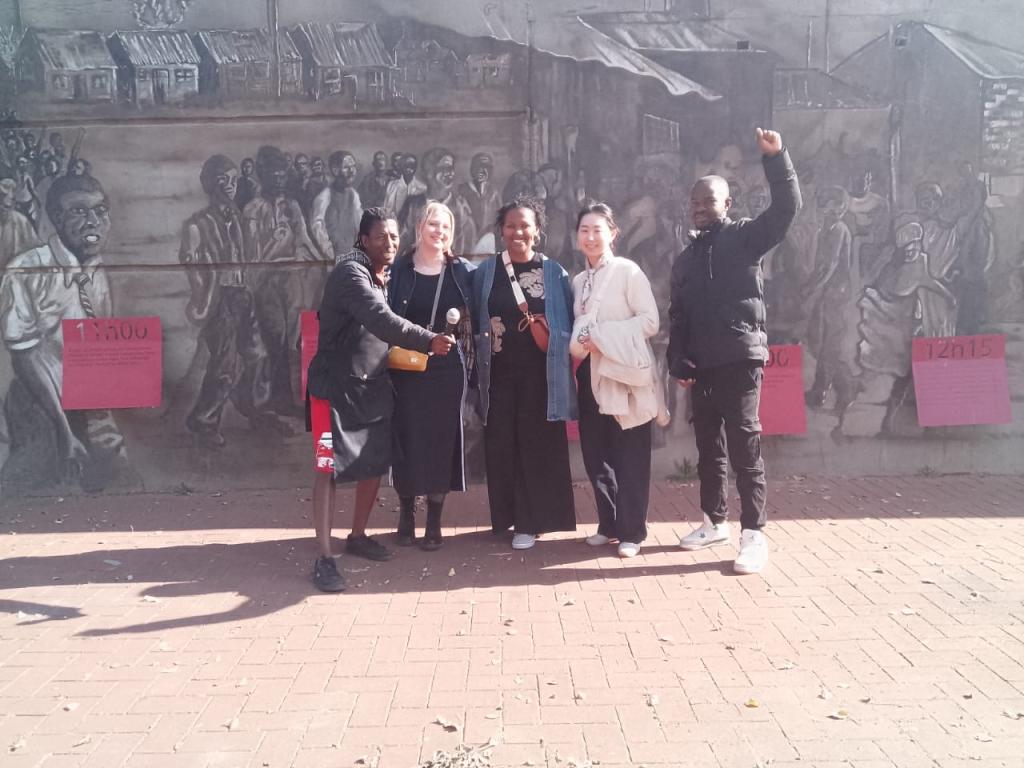
Who are museums for? Are they retraumatising as reminders of violence or are they educating us as reminders never to go back to what was? How can museums take responsibility and do justice to stories that can be overwhelming for the affected?
My recent journey to South Africa has left a profound impact and given me a lot to contemplate and, even more importantly, to discuss with both new and deepened connections.
My PhD is about co-creating a new educational programme developed around the Ulster Museum’s Troubles and Beyond collection that fosters creative thinking skills while promoting peacebuilding. I am currently working with two schools in Belfast. The goal of my journey to South Africa was to contribute to the establishment of the Community Social Innovation Network with colleagues from the University of the Witwatersrand in Johannesburg to discuss research on community work. I stayed in Johannesburg for a week and then travelled on to Cape Town.
This research trip gave me the opportunity to engage with a variety of museums that address South Africa’s difficult heritage and learn more about the struggle for justice and peace. I am especially grateful for the insights I gained into the inspiring community-based projects in Soweto and how creative practice can be used to discuss apartheid and peacebuilding with young people.
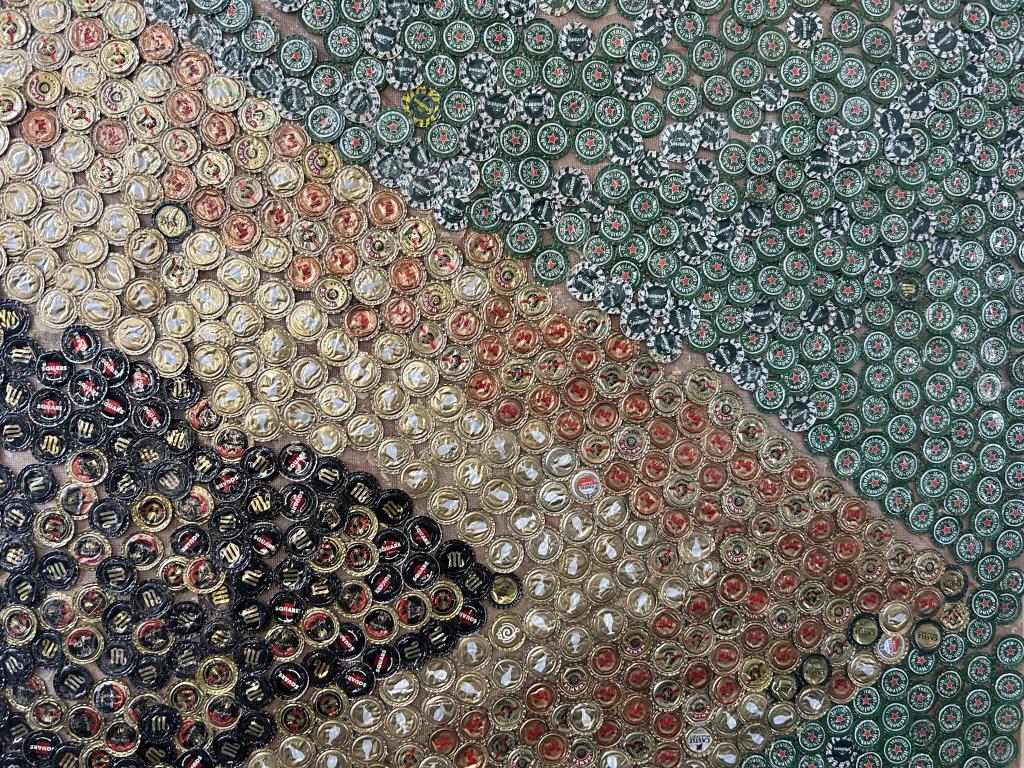
In the first week, I was able to visit museums and heritage sites in Soweto as well as attend an energetic performance of the Sarafina! musical. I spent a day exploring various art galleries across Johannesburg and the Origins Centre at Wits University. I learned about the violent history at Constitution Hill and engaged with community artwork.
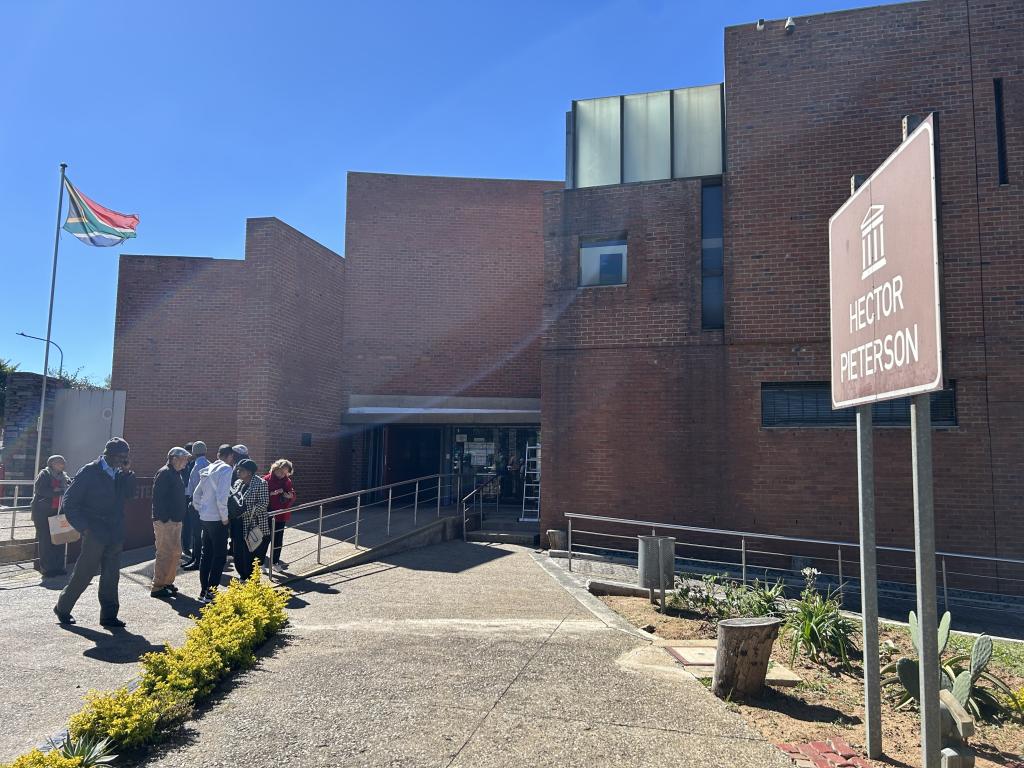
One of the sites I visited was the Hector Pieterson Museum in Soweto, a memorial dedicated to the 1976 student uprisings. On 16 June 1976, thousands of students gathered in the streets – where the museum now stands – to protest the government's decision to impose Afrikaans as the medium of instruction in schools. The demonstration was met with extreme police violence, resulting in the deaths of hundreds of people. Among them was 12-year-old Hector Pieterson, whose death became a defining symbol of the brutality of Apartheid. The photograph of his lifeless body, carried by another student, was circulated around the world and exposed the violence of the Apartheid regime to an international audience.
The museum relies primarily on photography and video installations to present a chronological account of the events of 16 June and their aftermath. Physical objects are used sparingly, among the few artifacts on display are metal bin lids that students used as makeshift shields against police attacks.
Outside the museum, we encountered a group of people who had themselves participated in the uprising. They were visibly moved by their visit, as the exhibition had brought back memories of that traumatic day. I also learned that some local residents are critical of the museum because it serves as a constant reminder of the oppression and violence that took place in their community. This made me reflect on the emotional and social impact that memorial museums can potentially impose on the communities in which they are situated, and how they balance addressing profound loss and trauma while remaining sensitive to those who continue to live with their legacy.
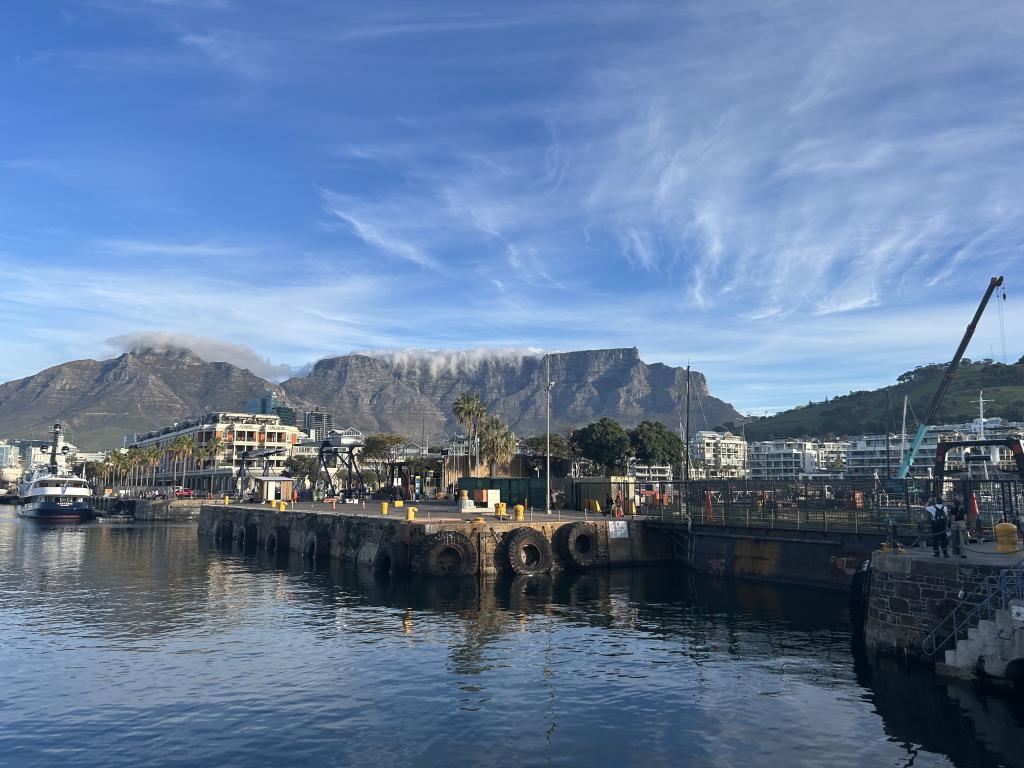
While in Cape Town, I attended the Bold Ideas for Brighter Futures 2026: 2nd Global Conference on Child and Adolescent Mental Health, which highlighted the importance of co-design as a way of engaging and working with young people. A half-day trip to Robben Island, including a tour guided by a former prisoner, underscored the importance of oral testimonies in understanding the injustices of the past and present. Visits to the Zeitz MOCAA Museum of Contemporary Art Africa and the District Six Museum provided insights into creative reflections on South Africa’s history and the impact of violence on communities.
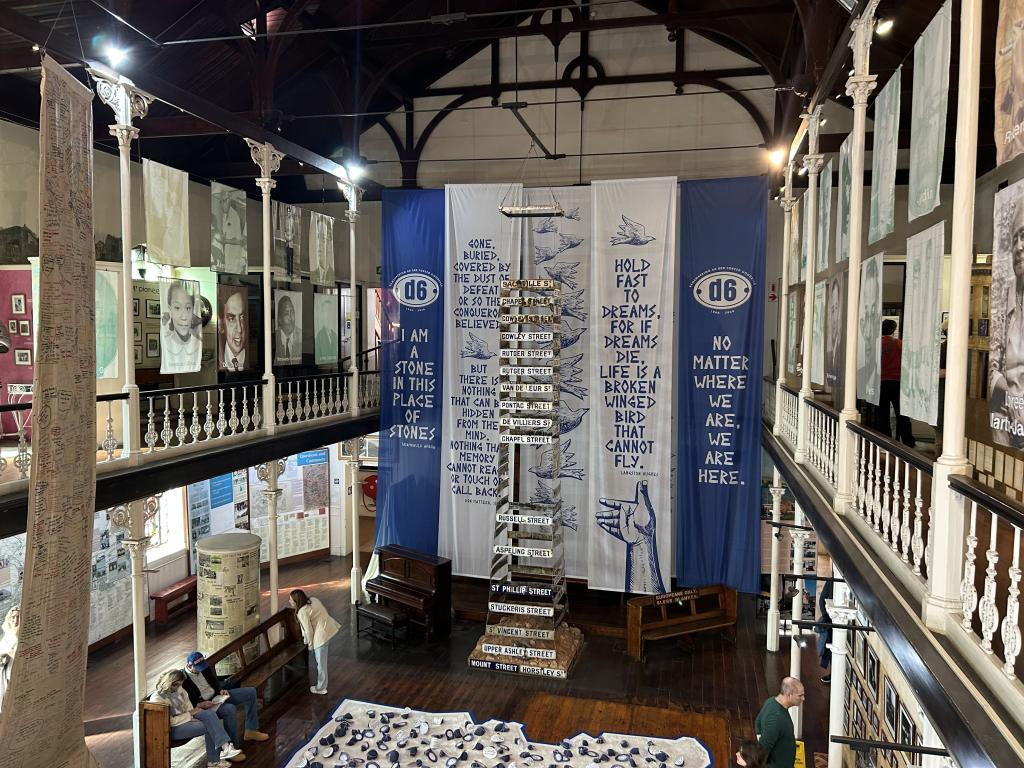
The District Six Museum commemorates the vibrant and culturally diverse community that once lived in Cape Town’s District Six before its residents, classified as non-white under the Apartheid regime’s racial laws, were forcibly removed from their homes. Housed in a former Methodist church, the museum tells the story of the neighbourhood through the memories of its former inhabitants. Visitors can explore reconstructions of places such as a family apartment and a barber shop, while photographs, personal belongings and suitcases evoke the disruption and loss experienced by those who were displaced. At the centre of the museum, an art installation invites visitors to reflect on the history of District Six and to leave messages of remembrance and solidarity.
A meaningful way to experience the museum is through one of its guided tours, which are led by former residents or their descendants. Our guide’s family had lived in District Six before the forced removals. He shared personal memories of his family's life in the neighbourhood and also spoke about the lasting consequences of displacement: communities were relocated far from their homes, often to areas with poor infrastructure and unsafe living conditions, while the trauma of forced removal continues to affect subsequent generations.
The District Six Museum demonstrates how museums can serve not only as places of remembrance but also as spaces where communities preserve their own histories, reclaim their voices and foster solidarity in the face of historical injustice.
I would like to thank Hayley Haynes-Rolando, Phethile Zitha, Collin, Simangaliso, Jill Bradbury & Maria Marchetti-Mercer from the University of the Witwatersrand, Christina Laurenzi from Stellenbosch University and my supervisor Liam O’Hare for facilitating this visit.
The experience has broadened my understanding of museum education through decolonial and community-based perspectives. It highlighted the challenges museums in divided societies face and the responsibilities they need to address. It also made me reflect on the importance of oral testimonies, how impactful it is to hear first-hand accounts and save these voices for the next generations. At the same time, it is important to recognise that revisiting painful memories can be retraumatising, and that sharing these experiences may place too great an emotional burden on individuals. I considered how the voices of the affected can be respectfully included into museum practice or whether it is the responsibility of generations further removed from the direct violence of the Apartheid era to tell their family’s stories.
These insights will strengthen the global scope of my PhD, equipping me to contribute to more context-sensitive approaches in museum education in deeply divided societies. I have also learned more about innovative ways creative practice can be used to educate and engage with young people.
We will continue building this network, sharing insights on community work in divided societies and learning from one another.