

Image
A Case Study of the Northern Ireland Prison Service Collection
Everyone has thrown a tennis ball - at school, on courts at the weekend, for their dog or kid. Everyone is familiar with what it feels like to heft it as far as they can and hope someone else will catch it. The Northern Ireland Prison Service Collection, which was acquired in 2018, contains over 1500 objects collected from prisons across Northern Ireland, primarily during the Troubles, including two such tennis balls. While prison often seems like a different world, these objects, that are every day and familiar, reveal that there’s a lot to be learned about life on the inside and our understanding of these experiences.
My PhD project is one puzzle piece of the wider picture of research that is being done by National Museums NI into this collection, and of Northern Ireland’s Troubles heritage landscape more generally. Through building relationships with those represented within the collection, this project aims to centre lived experiences, recognising the knowledge, value and insights they can provide. As shown with memory projects such as Healing Through Remembering’s ‘Everyday Objects Transformed by the Conflict’ exhibition, everyday stories are an important part of sharing and understanding heritage in Northern Ireland.
There are many questions raised by the objects in the Northern Ireland Prison Service Collection, even your everyday tennis ball, which are touched upon below. Working with an under-researched collection creates unique opportunities for more stories to be gathered, and answers to be found.
Firstly, these tennis balls in their final form were likely contraband. Many of the objects that are a part of the collection are. Starting in the 1970s, Maze/Long Kesh prison officer Billy Hull took items that had been confiscated from prisoners and kept them to start forming the collection. Over the next decades, this collection grew until eventually it was placed on display in a staff area of the prison itself in the 90s. It then changed further when it moved to the Northern Ireland Prison Service Museum at Millisle, the prison officer training grounds at the time.
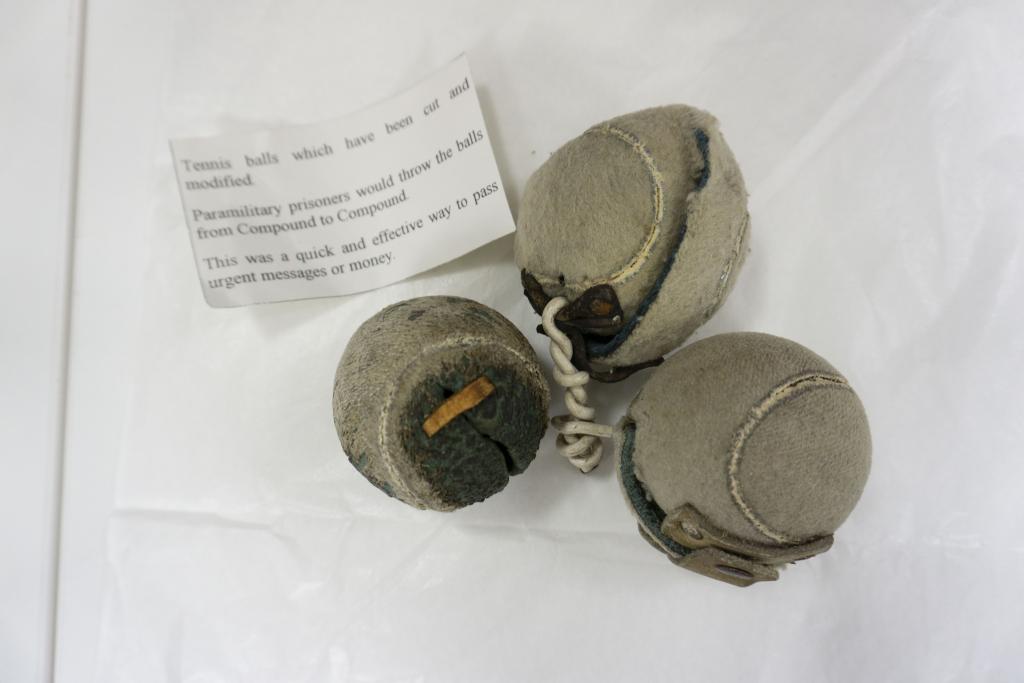
Here, the tennis balls are a museum object. Over the lifetime of the collection, the objects have passed through many different hands. Things have been added, but more often lost, and a lot of those losses were in terms of information. With many of the objects, we don’t know who owned them originally, when or where they came from, or what their purpose was. We can assume these are from Maze/Long Kesh as this object is one of the few to retain an exhibition label from being displayed, which reads:
“Tennis balls which have been cut and modified. Paramilitary prisoners would throw the balls from Compound to Compound. This was a quick and effective way to pass urgent messages or money.”
From the exhibition label, and the notes of the previous curator, we know that these tennis balls were used for communicating. A message was hidden inside, but it is only a snippet of a conversation, hard to put into context. Like the cigarette papers in the Troubles and Beyond exhibition at the Ulster Museum, which have tiny messages written on them, these objects offer a glimpse into life within the prison, the conversations that were happening, what people wanted to share.
Beyond those words, the object also tells us other things about prison life. The tennis ball has been hinged with a leather clasp, a sign of creativity and ingenuity in prison. Therefore, the object reflects the everyday for those held in Maze/Long Kesh at certain periods, and their access to tools for crafting, such as leatherworking, and kit for sports, like tennis. These tools are as much a part of the collection and its stories as objects you’d stereotypically think of when you think “prisons”.
There is still so much more to be learned about these tennis balls, the collection more broadly and the everyday lived experience of those within prisons during the Troubles.
By having conversations with those who can speak directly to these items, their stories can not only begin to answer the many questions above but shape how prison histories are understood in Northern Ireland.